250+ Riddles for Adults With Answers (Funny, Hard, Tricky & Clever Brain Teasers)
Have you ever spent several minutes thinking about a simple question, only to laugh when you finally discovered the answer? That’s the magic of riddles for adults. They entertain, challenge your brain, and make you think in ways you never expected.
Unlike kids’ riddles, adult riddles are more creative and unpredictable. They use clever wordplay, logical thinking, and unexpected twists instead of obvious clues. Some will make you laugh, while others will leave you scratching your head before the answer suddenly clicks.
The best part? Solving riddles isn’t just fun-it also helps improve your memory, problem-solving skills, creativity, and critical thinking. Whether you’re enjoying a game night, taking a break from work, or simply looking for a mental challenge, a good riddle is always a great choice.
In this collection, you’ll find 250+ riddles for adults with answers, including funny riddles, tricky brain teasers, logic puzzles, and hard riddles for adults that will really test your thinking. Every riddle comes with an answer and a simple explanation, so you’ll understand exactly why it works.
So, get ready to challenge your mind, surprise your friends, and see how many of these best riddles for adults you can solve before checking the answers!
Best Riddles For Adults
This opening collection brings together some of the best riddles for adults on the internet – a mix of classic logic puzzles, wordplay, and lateral-thinking questions that have stood the test of time. If you only have a few minutes and want the highest-quality picks, start here before moving into the more specific categories below. Each of these riddles for adults with answers has been chosen because it strikes a good balance between being genuinely clever and still solvable without a calculator.
1. Riddle: The more you take, the more you leave behind. What am I? Answer: Footsteps. Explain: Every step you take creates a footprint behind you, so the more steps (takes) you make, the more footprints (leftovers) exist. Difficulty: Easy
2. Riddle: I have cities, but no houses. I have mountains, but no trees. I have water, but no fish. What am I? Answer: A map. Explain: A map represents real-world features symbolically without containing the physical things themselves. Difficulty: Easy
3. Riddle: What has a neck but no head? Answer: A bottle. Explain: The narrow top part of a bottle is commonly called its “neck,” even though the object has no head or body in the human sense. Difficulty: Easy
4. Riddle: A man is found dead in a locked room with no windows. The only things in the room are a puddle of water and a rope hanging from the ceiling. How did he die? Answer: He stood on a block of ice to hang himself, and the ice melted, leaving the puddle. Explain: This is a classic lateral-thinking riddle where the missing “tool” (the ice) disappears by the time the scene is discovered. Difficulty: Hard
5. Riddle: What can travel around the world while staying in a corner? Answer: A stamp. Explain: A postage stamp sits in the corner of an envelope yet can travel to any destination in the world. Difficulty: Medium
6. Riddle: I speak without a mouth and hear without ears. I have no body, but I come alive with wind. What am I? Answer: An echo. Explain: An echo repeats sound (as if speaking) and responds to sound waves (as if hearing), yet it has no physical form. Difficulty: Medium
7. Riddle: What has hands but cannot clap? Answer: A clock. Explain: A clock has “hands” that point to numbers, but they move mechanically and cannot come together to clap. Difficulty: Easy
8. Riddle: The person who makes it, sells it. The person who buys it never uses it. The person who uses it never knows they are using it. What is it? Answer: A coffin. Explain: A coffin maker sells it, a grieving family buys it, and the deceased person inside is never aware of using it. Difficulty: Hard
9. Riddle: What gets wetter as it dries? Answer: A towel. Explain: A towel absorbs water (getting wetter) while it is used to dry something else off. Difficulty: Easy
10. Riddle: I am not alive, but I grow. I don’t have lungs, but I need air. I don’t have a mouth, but water kills me. What am I? Answer: Fire. Explain: Fire “grows” by spreading, needs oxygen (air) to burn, and is extinguished by water. Difficulty: Medium
11. Riddle: What can fill a room but takes up no space? Answer: Light. Explain: Light spreads through an entire room instantly but has no physical mass or volume of its own. Difficulty: Medium
12. Riddle: Two fathers and two sons go fishing. They each catch one fish, yet only three fish are caught in total. How is this possible? Answer: There are only three people: a grandfather, a father, and a son. Explain: The middle person is both a father and a son, so “two fathers and two sons” describes three individuals, not four. Difficulty: Hard
13. Riddle: What has one eye but cannot see? Answer: A needle. Explain: The small hole in a sewing needle is called its “eye,” but it has no vision. Difficulty: Easy
14. Riddle: I am taken from a mine and shut in a wooden case, from which I am never released, yet I am used by almost everyone. What am I? Answer: Pencil lead (graphite). Explain: Graphite is mined, encased in a wooden pencil, and never leaves that casing even as it is used to write. Difficulty: Medium
15. Riddle: What building has the most stories? Answer: A library. Explain: This plays on the double meaning of “stories” – floors of a building versus books full of stories. Difficulty: Easy
16. Riddle: Voiceless, it cries; wingless, it flutters; toothless, it bites. What is it? Answer: The wind. Explain: Wind can “howl” like crying, “flutter” objects without having wings, and “bite” with cold without teeth. Difficulty: Medium
17. Riddle: What five-letter word becomes shorter when you add two letters to it? Answer: “Short” – adding “er” makes “shorter.” Explain: This is a wordplay riddle where the literal meaning of the word contradicts what happens grammatically when letters are added. Difficulty: Medium
18. Riddle: A man walks into a bar and asks the bartender for a glass of water. The bartender pulls out a gun and points it at him. The man says “thank you” and walks out. Why? Answer: The man had hiccups; the shock of the gun cured them, so he no longer needed the water. Explain: This lateral-thinking classic requires you to think beyond the literal danger and consider an unusual solution to a common problem. Difficulty: Hard
19. Riddle: What comes once in a minute, twice in a moment, but never in a thousand years? Answer: The letter “M.” Explain: This riddle is about counting letters in the words themselves, not units of time – “M” appears once in “minute,” twice in “moment,” and zero times in “thousand years.” Difficulty: Medium
20. Riddle: I am always in front of you but can’t be seen. What am I? Answer: The future. Explain: The future always lies ahead of everyone, yet no one can physically see or touch it before it arrives. Difficulty: Medium
Funny Riddles For Adults
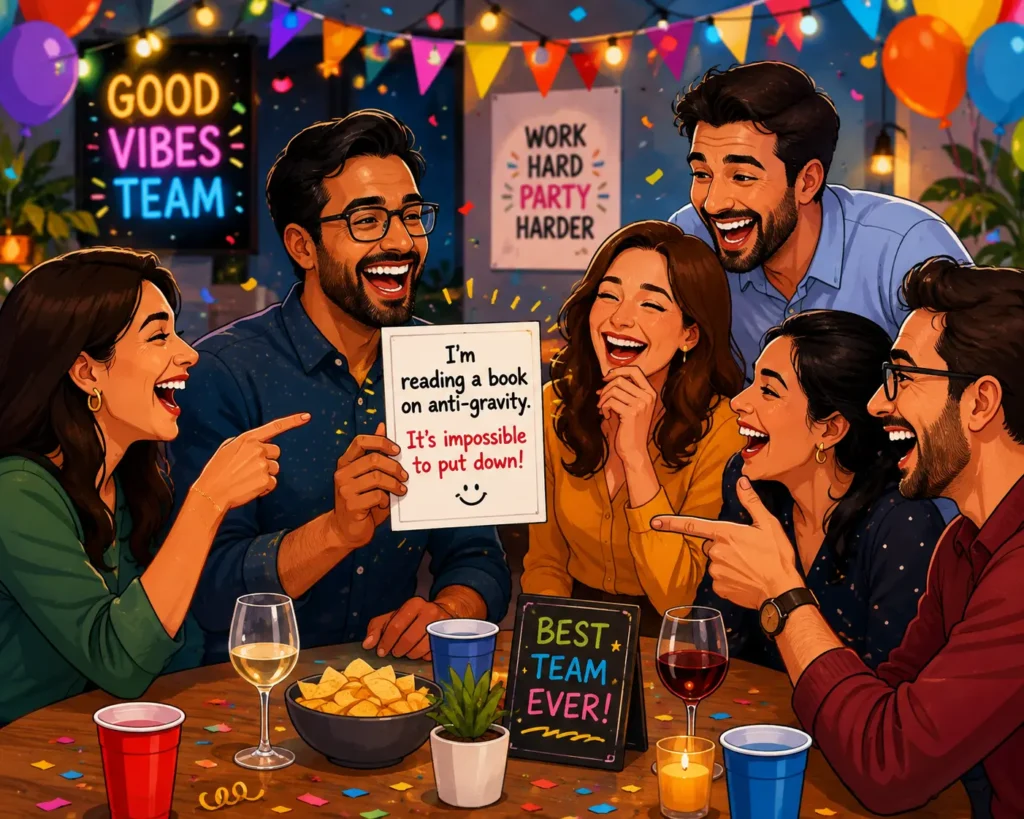
Sometimes you just want a laugh instead of a headache. This set of funny riddles for adults is built around puns, sarcasm, and everyday adult situations – marriage, aging, bills, and bad mornings. These funny riddles with answers for adults are perfect for lightening the mood at a party or breaking the ice with coworkers. If you want hilarious riddles for adults that don’t require a whiteboard to solve, this is the section for you.
21. Riddle: Why did the adult bring a ladder to the bar? Answer: Because they heard the drinks were on the house. Explain: A pun on the phrase “drinks are on the house,” taken literally as drinks sitting on a rooftop. Difficulty: Easy
22. Riddle: What do you call an adult who never grows up but still pays rent? Answer: A “kidult.” Explain: A playful blend of “kid” and “adult” describing someone who keeps youthful habits despite adult responsibilities. Difficulty: Easy
23. Riddle: I get smaller every time I take a bath. What am I? Answer: A bar of soap. Explain: Soap physically shrinks with each use in the bath, unlike a person who simply gets clean. Difficulty: Easy
24. Riddle: Why did the coffee file a police report? Answer: It got mugged. Explain: A pun on “mug,” referring both to a coffee cup and the verb meaning to rob someone. Difficulty: Easy
25. Riddle: What has a bed but never sleeps, and a mouth but never eats? Answer: A river. Explain: A “riverbed” and a river’s “mouth” (where it meets the sea) are geographic terms unrelated to actual sleeping or eating. Difficulty: Medium
26. Riddle: Why can’t your nose be twelve inches long? Answer: Because then it would be a foot. Explain: A play on the unit of measurement “foot” being equal to twelve inches. Difficulty: Easy
27. Riddle: What kind of tree fits in your hand? Answer: A palm tree. Explain: A pun on the “palm” of your hand and the palm tree. Difficulty: Easy
28. Riddle: Why did the adult bring string to the office party? Answer: To tie up loose ends before the deadline. Explain: A workplace pun combining the literal use of string with the idiom for finishing unfinished tasks. Difficulty: Medium
29. Riddle: What has many keys but can’t open a single lock? Answer: A piano. Explain: Piano “keys” produce music, not the kind of keys used for locks. Difficulty: Easy
30. Riddle: Why did the married couple bring a ladder on their date? Answer: They heard the relationship needed to go to the next level. Explain: A pun on “next level,” taken literally as climbing higher with a ladder. Difficulty: Easy
31. Riddle: I have a spine but no bones. What am I? Answer: A book. Explain: The “spine” of a book is the bound edge, unrelated to human anatomy. Difficulty: Easy
32. Riddle: Why did the calendar look stressed at the end of the month? Answer: Because its days were numbered. Explain: A pun on the idiom “days are numbered,” referring literally to calendar dates. Difficulty: Easy
33. Riddle: What did the tired adult say to their alarm clock? Answer: “You’re the reason I have trust issues.” Explain: A humorous exaggeration playing on how an alarm clock disrupts sleep every morning. Difficulty: Easy
34. Riddle: Why did the office worker bring a pillow to the meeting? Answer: Because it promised to be a long, boring one. Explain: A relatable joke about tedious workplace meetings. Difficulty: Easy
35. Riddle: What has legs but doesn’t walk? Answer: A table. Explain: Furniture “legs” support the object but don’t actually move. Difficulty: Easy
36. Riddle: Why did the grown-up start doing yoga? Answer: Because bending over to pick things up wasn’t stretching enough anymore. Explain: A joke about the physical realities of getting older. Difficulty: Easy
37. Riddle: What kind of key opens a banana? Answer: A mon-key. Explain: A pun combining “key” with “monkey,” an animal associated with bananas. Difficulty: Easy
38. Riddle: Why don’t adults ever tell secrets at the office? Answer: Because the walls (and the group chat) have ears. Explain: A play on the idiom “walls have ears,” updated for modern workplace gossip. Difficulty: Medium
39. Riddle: What did one wall say to the other wall at the party? Answer: “Let’s meet at the corner.” Explain: A simple pun playing on where two walls physically meet. Difficulty: Easy
40. Riddle: Why did the adult’s diet plan fail after one day? Answer: Because “one day” turned into “one day I’ll start again.” Explain: A relatable joke about procrastination and broken New Year’s resolutions. Difficulty: Easy
Hard Riddles For Adults
If wordplay is too easy for you, this section is where things get serious. These are genuinely hard riddles for adults – the kind that require you to sit with the question, discard your first three guesses, and think laterally before the answer clicks. Some of these really hard riddles for adults combine logic, math, and misdirection all at once. Consider this your collection of the hardest riddles for adults on this page; take your time before checking the answer.
41. Riddle: A man pushes his car to a hotel and tells the owner he’s bankrupt. Why? Answer: He is playing Monopoly. Explain: The scenario describes a board game piece and situation, not real life – a classic misdirection riddle. Difficulty: Hard
42. Riddle: What has 13 hearts but no other organs? Answer: A deck of playing cards. Explain: A standard deck contains 13 cards in the hearts suit, but no literal biological organs. Difficulty: Medium
43. Riddle: Before Mount Everest was discovered, what was the tallest mountain on Earth? Answer: Mount Everest – it was always the tallest, even before it was measured or named. Explain: This riddle tricks you into thinking “discovery” changes physical reality, when it only changes human knowledge. Difficulty: Hard
44. Riddle: A woman shoots her husband, then holds him underwater for five minutes, then hangs him. Five minutes later they enjoy a lovely dinner together. How? Answer: She took a photo of him (shot with a camera), developed the photo in a water bath, then hung it up to dry. Explain: Every violent-sounding verb has a harmless photography meaning instead. Difficulty: Hard
45. Riddle: What English word retains the same pronunciation, even after you take away four of its five letters? Answer: “Queue” – it’s pronounced the same as just “Q.” Explain: Removing “ueue” leaves the single letter “Q,” which sounds identical to the full word. Difficulty: Hard
46. Riddle: A man is looking at a portrait. Someone asks whose picture he’s looking at. He replies, “Brothers and sisters, I have none, but this man’s father is my father’s son.” Who is in the portrait? Answer: His own son. Explain: “My father’s son” (with no siblings) is the man himself, so the portrait is of his own son. Difficulty: Hard
47. Riddle: You see a boat filled with people, yet there isn’t a single person on board. How? Answer: All the people on the boat are married, so there isn’t a single (unmarried) person. Explain: This relies on the double meaning of “single” as both “one” and “unmarried.” Difficulty: Medium
48. Riddle: What can run but never walks, has a mouth but never talks, has a bed but never sleeps? Answer: A river. Explain: Rivers “run,” have a “mouth” where they meet the sea, and a “bed” along the bottom, all geographic terms. Difficulty: Medium
49. Riddle: If you drop a yellow hat in the middle of the Red Sea, what does it become? Answer: Wet. Explain: This riddle tricks you into overthinking color or geography when the literal, simplest answer is correct. Difficulty: Hard
50. Riddle: A father’s age is three times his son’s age. Five years ago, the father was four times as old as his son. How old are they now? Answer: The father is 45 and the son is 15. Explain: Setting up equations: F = 3S and F−5 = 4(S−5) gives S = 15 and F = 45 when solved together. Difficulty: Hard
51. Riddle: What occurs once in every minute, twice in every week, but only once in a year? Answer: The letter “E.” Explain: Count the letter “E” in each time word: once in “minute,” twice in “week,” once in “year.” Difficulty: Hard
52. Riddle: There are three light switches outside a closed room, and one of them controls a light bulb inside. You can only enter the room once. How do you determine which switch controls the bulb? Answer: Turn on the first switch for a few minutes, then turn it off and turn on the second switch. Enter the room — the lit bulb corresponds to switch two, a warm but unlit bulb corresponds to switch one, and a cold unlit bulb corresponds to switch three. Explain: This uses the heat generated by the bulb as an extra source of information beyond just “on or off.” Difficulty: Hard
53. Riddle: A clerk in a butcher shop is 5’10” tall. What does he weigh? Answer: Meat. Explain: The question “what does he weigh” is a pun on his occupation of weighing meat, not his own body weight. Difficulty: Medium
54. Riddle: I am an odd number. Take away one letter and I become even. What number am I? Answer: Seven — remove the “s” and it becomes “even.” Explain: This is a wordplay riddle rather than a math riddle; it plays on the spelling of the word, not its numeric value. Difficulty: Hard
55. Riddle: Two men are playing chess. They play five games, and each man wins the same number of games with no draws. How is this possible? Answer: They are not playing each other; they are each playing a different opponent. Explain: The riddle never states the two men are playing against one another, only that they are both playing chess. Difficulty: Hard
56. Riddle: What can you hold in your left hand but never in your right hand? Answer: Your right hand. Explain: Your right hand cannot hold itself, creating a logical impossibility that the riddle exploits. Difficulty: Medium
57. Riddle: A rooster lays an egg on the very top of a barn roof. Which way does the egg roll? Answer: Roosters don’t lay eggs, so the question is moot. Explain: This riddle tests whether you’re paying attention to a factual error hidden in a seemingly logical setup. Difficulty: Medium
58. Riddle: In a certain country, 5% of the population has a rare disease. A test for the disease is 90% accurate. If a random person tests positive, what is the actual probability they have the disease? Answer: Roughly 32%, once you factor in false positives among the healthy 95% of the population using Bayes’ theorem. Explain: Even a fairly accurate test produces many false positives when the underlying condition is rare, so intuition about “90% accurate” is misleading without the base rate. Difficulty: Hard
59. Riddle: What has to be broken before you can use it? Answer: An egg. Explain: An egg must be cracked open before its contents can be used in cooking, unlike most objects that break when damaged. Difficulty: Easy
60. Riddle: A man lives on the 20th floor of an apartment building. Every morning he takes the elevator to the ground floor. When he comes home, he takes the elevator to the 10th floor and walks the rest, except on rainy days when he goes all the way to the 20th floor. Why? Answer: He is too short to reach the button for the 20th floor unless he has an umbrella to press it with. Explain: On rainy days he carries an umbrella, which he uses to reach the higher button, solving a height limitation the riddle never states directly. Difficulty: Hard
Tricky Riddles For Adults
Tricky riddles for adults are less about heavy math and more about assumptions. The trick is usually hidden in how the question is worded — you’re led to imagine one scenario when the real answer is sitting in plain sight. These tricky riddles with answers for adults are great for testing how well someone listens, and they double as some of the most interesting riddles for adults to share because the “aha” moment is instant once you hear the answer.
61. Riddle: How can you drop a raw egg onto a concrete floor without cracking it? Answer: Concrete floors are very hard to crack — the egg is what breaks, not the floor. Explain: The riddle asks you to protect “it,” which grammatically refers to the floor, not the egg. Difficulty: Medium
62. Riddle: A doctor and a bus driver are both in love with the same woman. The bus driver had to go on a long trip that would last a week. Before he left, he gave the woman seven apples. Why? Answer: An apple a day keeps the doctor away. Explain: Giving her one apple per day for the week ensures she won’t need to visit (or be charmed by) the doctor while he’s gone. Difficulty: Medium
63. Riddle: What word in the English dictionary is always spelled incorrectly? Answer: “Incorrectly.” Explain: Literally spelling out the word “incorrectly” makes the statement true, no matter how it’s written. Difficulty: Medium
64. Riddle: If you have three apples and you take away two, how many do you have? Answer: Two — the ones you took away. Explain: The question asks how many you have, not how many are left in the original pile. Difficulty: Medium
65. Riddle: A farmer has 17 sheep, and all but 9 die. How many are left? Answer: Nine. Explain: “All but 9” means 9 survive, regardless of the starting number. Difficulty: Medium
66. Riddle: How many months have 28 days? Answer: All twelve months have at least 28 days. Explain: People often think only of February, forgetting every month contains at least 28 days within it. Difficulty: Easy
67. Riddle: What can you catch but not throw? Answer: A cold. Explain: “Catching” a cold refers to becoming ill, not literally catching a thrown object. Difficulty: Easy
68. Riddle: A man is pushed out of a plane without a parachute and lands safely. How? Answer: The plane was on the ground. Explain: Nothing in the riddle states the plane was flying, so the “fall” was harmless. Difficulty: Medium
69. Riddle: What can you break without ever touching it? Answer: A promise. Explain: Promises are abstract commitments that can be “broken” without any physical contact. Difficulty: Easy
70. Riddle: If a plane crashes exactly on the border between the U.S. and Canada, where do you bury the survivors? Answer: You don’t bury survivors — they’re still alive. Explain: The riddle relies on you overlooking the word “survivors” while focused on the geography question. Difficulty: Medium
71. Riddle: What has to be measured but is never seen? Answer: Time. Explain: We measure time constantly with clocks and calendars, but it has no physical, visible form. Difficulty: Medium
72. Riddle: A man rides into town on Friday, stays three days, and leaves on Friday. How? Answer: “Friday” is the name of his horse. Explain: The riddle assumes you’re thinking of the day of the week, when “Friday” is actually a proper noun for the animal. Difficulty: Hard
73. Riddle: What kind of room has no doors or windows? Answer: A mushroom. Explain: This is a wordplay riddle — “mushroom” contains the word “room” but isn’t an actual room. Difficulty: Easy
74. Riddle: I shave every day, but my beard stays the same. Who am I? Answer: A barber. Explain: The barber shaves customers, not himself, so his own beard length never changes from his work. Difficulty: Medium
75. Riddle: A woman had two sons who were born on the same hour of the same day of the same year, but they weren’t twins. How is that possible? Answer: They were two of a set of triplets (or more). Explain: The riddle only rules out “twins,” leaving open other multiple-birth possibilities. Difficulty: Medium
76. Riddle: What goes up but never comes down? Answer: Your age. Explain: Unlike physical objects, age only increases over a lifetime and never decreases. Difficulty: Easy
77. Riddle: How can a pants pocket be empty and still have something in it? Answer: The pocket can have a hole in it. Explain: A hole is technically “something” in the pocket even though there is no item inside. Difficulty: Medium
78. Riddle: A truck driver is going the wrong way down a one-way street. He passes at least ten police officers, yet none of them stop him. Why not? Answer: He is walking, not driving. Explain: The riddle calls him a “truck driver” by profession, but at that moment he’s simply on foot, breaking no traffic law. Difficulty: Hard
79. Riddle: What has one head, one foot, and four legs? Answer: A bed. Explain: A “headboard,” “footboard,” and four bed “legs” are all common furniture terms unrelated to a living creature. Difficulty: Medium
80. Riddle: You are in a race and you overtake the person in second place. What position are you in now? Answer: Second place. Explain: Overtaking the second-place runner means you take their spot, not first place. Difficulty: Medium

Logic Riddles For Adults
Logic riddles for adults rely on structured reasoning rather than jokes or wordplay. These are closer to mini puzzles: you often need to track clues, eliminate possibilities, or think several steps ahead. This category also includes classic lateral thinking riddles for adults, where the solution requires you to question an assumption baked into the setup rather than crunch numbers.
81. Riddle: You have two ropes, each of which takes exactly one hour to burn, but they burn unevenly. How do you measure exactly 45 minutes? Answer: Light one rope at both ends and the other rope at one end simultaneously. When the first rope finishes burning (30 minutes), light the other end of the second rope — it will finish in another 15 minutes, totaling 45. Explain: Burning a rope from both ends halves its burn time regardless of how unevenly it burns, since the two flames always meet in the middle in half the total time. Difficulty: Hard
82. Riddle: Three boxes are labeled “Apples,” “Oranges,” and “Apples and Oranges,” but all three labels are wrong. You may pick one fruit from one box without looking inside. How do you correctly label all three boxes? Answer: Pick a fruit from the box labeled “Apples and Oranges.” Since all labels are wrong, that box contains only one type of fruit, which tells you what it actually is — and from there, logic determines the other two. Explain: Because every label is guaranteed wrong, the mixed-label box must be a single-fruit box, giving you a guaranteed starting clue to unravel the rest. Difficulty: Hard
83. Riddle: A man is looking at a photo of someone. His friend asks who it is. The man says, “I have no siblings, but that man’s father is my father’s son.” Who is in the photo? Answer: His own son. Explain: Since he has no siblings, “my father’s son” refers to himself, making the photo’s subject his own child. Difficulty: Hard
84. Riddle: Five people were eating apples. A finished before B, but behind C. D finished before E, but behind B. What was the finishing order? Answer: C, A, B, D, E. Explain: Working through each clue in order (C before A, A before B, B before D, D before E) produces a single valid sequence. Difficulty: Hard
85. Riddle: You are in a room with two doors guarded by two guards. One door leads to freedom, the other to doom. One guard always lies, the other always tells the truth, but you don’t know which is which. You can ask one guard one question. What do you ask? Answer: Ask either guard, “What would the other guard say is the door to freedom?” Then choose the opposite door. Explain: Both guards, whether truthful or lying, will point you to the same (wrong) door through this question, so picking the other one guarantees freedom. Difficulty: Hard
86. Riddle: There are 10 people at a party, and each person shakes hands with every other person exactly once. How many handshakes take place? Answer: 45 handshakes. Explain: Using the combination formula for pairs, 10 people choosing 2 at a time gives (10 × 9) ÷ 2 = 45. Difficulty: Medium
87. Riddle: A farmer needs to cross a river with a wolf, a goat, and a cabbage. His boat only carries himself and one other item at a time. If left alone, the wolf eats the goat, and the goat eats the cabbage. How does he get everything across safely? Answer: Take the goat first, return alone, take the wolf, bring the goat back, take the cabbage, return alone, and finally take the goat across again. Explain: The sequence avoids ever leaving the wolf alone with the goat or the goat alone with the cabbage on either riverbank. Difficulty: Hard
88. Riddle: You have 8 identical-looking balls, but one is slightly heavier. Using a balance scale only twice, how do you find the heavier ball? Answer: Divide into three groups (3, 3, 2). Weigh the two groups of three first; if balanced, weigh the remaining two balls. If unbalanced, weigh two of the three heavier-side balls to isolate the odd one. Explain: Splitting into groups and comparing subsets narrows down the possibilities logarithmically, allowing identification in just two weighings. Difficulty: Hard
89. Riddle: In a small town, the barber shaves everyone who does not shave themselves, and no one else. Who shaves the barber? Answer: This is a logical paradox — no consistent answer exists. Explain: If the barber shaves himself, he violates the rule of only shaving those who don’t shave themselves, and if he doesn’t, the rule says he must, creating a contradiction. Difficulty: Hard
90. Riddle: A woman gives a beggar 50 cents; the woman is the beggar’s sister, but the beggar is not the woman’s brother. How? Answer: The beggar is the woman’s sister. Explain: The riddle assumes the beggar must be male, but nothing states that — the beggar is simply another woman. Difficulty: Medium
91. Riddle: You have a 3-liter jug and a 5-liter jug and unlimited water. How do you measure exactly 4 liters? Answer: Fill the 5-liter jug, pour into the 3-liter jug until full (leaving 2 liters in the 5-liter jug), empty the 3-liter jug, pour the 2 liters into it, then refill the 5-liter jug and top off the 3-liter jug — leaving exactly 4 liters in the 5-liter jug. Explain: Systematically transferring between differently sized containers lets you isolate amounts that neither jug can measure directly. Difficulty: Hard
92. Riddle: Four people need to cross a bridge at night with only one flashlight, which must be used for every crossing. They take 1, 2, 7, and 10 minutes respectively to cross, and only two people can cross at once, moving at the slower person’s pace. What is the fastest total time to get everyone across? Answer: 17 minutes. Explain: Sending the two fastest people back and forth to shuttle the flashlight minimizes the impact of the two slowest people’s crossing times. Difficulty: Hard
93. Riddle: A man says, “Everything I say to you is a lie.” Is he telling the truth? Answer: This creates a paradox — if the statement is true, it must also be false, and vice versa. Explain: This is a version of the classic “liar paradox,” which cannot be resolved with a simple true or false answer. Difficulty: Hard
94. Riddle: Which is heavier: a pound of feathers or a pound of bricks? Answer: They weigh the same — one pound. Explain: The word “pound” already defines equal weight; only the volume and density differ between feathers and bricks. Difficulty: Easy
95. Riddle: A survey shows 70% of people like apples and 75% like bananas. What is the minimum percentage of people who like both? Answer: 45%. Explain: Using the principle of inclusion-exclusion, the overlap must be at least 70% + 75% − 100% = 45%. Difficulty: Hard
96. Riddle: Three switches control three light bulbs in another room. You can flip switches as much as you like, but you may only enter the room once to check the bulbs. How do you determine which switch controls which bulb? Answer: Turn on switch one for several minutes, then off. Turn on switch two and leave it on. Enter the room: the lit bulb is switch two, the warm unlit bulb is switch one, and the cold unlit bulb is switch three. Explain: Using both light and residual heat as clues lets you distinguish all three bulbs in a single visit. Difficulty: Hard
97. Riddle: If it takes 5 machines 5 minutes to make 5 widgets, how long would it take 100 machines to make 100 widgets? Answer: Still 5 minutes. Explain: Each machine independently makes one widget in 5 minutes, so scaling both machines and widgets equally doesn’t change the time required. Difficulty: Medium
98. Riddle: In a room of 23 people, what is the probability that at least two share the same birthday? Answer: Just over 50%. Explain: This is the well-known “birthday paradox” — the number of possible pairings grows quickly enough that even a small group has surprisingly high odds of a shared birthday. Difficulty: Hard
99. Riddle: A snail is at the bottom of a 10-foot well. Each day it climbs 3 feet, but slides back 2 feet at night. How many days does it take to escape? Answer: 8 days. Explain: The snail gains a net 1 foot per day, but on the final day it climbs the last 3 feet and escapes before sliding back, so the last stretch is reached a day earlier than a simple average would suggest. Difficulty: Medium
100. Riddle: Two guards stand at a fork in the road — one path leads to a village, the other to a swamp. One guard always lies and one always tells the truth, but they look identical and you don’t know which is which. You may ask only one guard one yes-or-no question. How do you find the village? Answer: Ask, “If I asked the other guard which path leads to the village, what would they say?” Then take the opposite path. Explain: This mirrors the classic two-guard logic puzzle: the false answer, whether reached through a liar or a truth-teller, always points to the wrong path, so choosing the opposite works every time. Difficulty: Hard
Brain Teaser Riddles For Adults
Brain teaser riddles for adults blur the line between visual puzzles, riddles, and quick logic problems. They’re less about jokes and more about that satisfying click when a pattern finally makes sense. This collection of brain teasers and riddles for adults works well for warming up before trivia night or simply keeping your mind active during a break.
101. Riddle: What five-letter word, when you remove the first letter, becomes a homophone of the remaining four-letter word? Answer: “Aisle”: remove A, it becomes “isle,” a homophone of “aisle” itself. Explain: Removing the first letter of “aisle” leaves “isle,” which sounds identical to the original word. Difficulty: Hard
102. Riddle: I have branches, but no fruit, trunk, or leaves. What am I? Answer: A bank. Explain: A bank has “branches” (locations), a play on the tree-related word used in a financial context. Difficulty: Easy
103. Riddle: What number, when spelled out, has letters in alphabetical order? Answer: “Forty” (f-o-r-t-y is the only number spelled with letters in strictly increasing alphabetical order). Explain: Checking the spelling of small numbers reveals “forty” is the unique case where each letter comes later in the alphabet than the one before it. Difficulty: Hard
104. Riddle: There are three houses: one red, one blue, and one white. If the red house is to the left of the house in the middle, and the blue house is to the right of the house in the middle, where’s the white house? Answer: In Washington, D.C. Explain: The riddle tricks you into solving a spatial puzzle when the “White House” is simply a real, famous building. Difficulty: Medium
105. Riddle: What is so fragile that saying its name breaks it? Answer: Silence. Explain: The moment you speak the word “silence” out loud, you’ve already broken it. Difficulty: Medium
106. Riddle: What has many teeth but cannot bite? Answer: A comb. Explain: The narrow prongs of a comb are called “teeth” but serve no biting function. Difficulty: Easy
107. Riddle: A boy was asked how old he was. He replied, “In two years I will be twice as old as I was five years ago.” How old is he? Answer: 12 years old. Explain: Setting up the equation (x + 2) = 2(x − 5) and solving gives x = 12. Difficulty: Hard
108. Riddle: What can you see in the middle of March and April that you can’t see in any other month? Answer: The letter “R.” Explain: This is a wordplay riddle about the letters shared between “March” and “April,” not the calendar dates. Difficulty: Hard
109. Riddle: What word becomes shorter when you add a syllable to it? Answer: “Short.” Explain: Adding “-er” to “short” creates “shorter,” ironically making the word longer in letters while its meaning is about brevity. Difficulty: Medium
110. Riddle: Forward I am heavy, backward I am not. What am I? Answer: “Ton” — spelled backward it becomes “not.” Explain: This wordplay riddle relies on reversing the letters of the word to reveal a second, opposite-meaning word. Difficulty: Medium
111. Riddle: If two is company and three is a crowd, what are four and five? Answer: Nine. Explain: This riddle switches from an idiomatic riddle format to simple arithmetic, catching people who expect wordplay throughout. Difficulty: Medium
112. Riddle: What can be cracked, made, told, and played? Answer: A joke. Explain: All four verbs — cracked, made, told, played — are common idioms used specifically with the word “joke.” Difficulty: Medium
113. Riddle: What has an eye, but cannot see, and is often found in the middle of the ocean? Answer: A hurricane. Explain: The calm center of a hurricane is called its “eye,” a meteorological term unrelated to actual vision. Difficulty: Medium
114. Riddle: I have a golden head and a golden tail, but no golden body. What am I? Answer: A coin. Explain: Coins have “heads” and “tails” as their two sides, but nothing in between that could be called a body. Difficulty: Easy
115. Riddle: The more of this there is, the less you see. What is it? Answer: Darkness. Explain: As darkness increases, visibility decreases proportionally. Difficulty: Easy
116. Riddle: What English word has three consecutive double letters? Answer: “Bookkeeper.” Explain: The word contains “oo,” “kk,” and “ee” back to back, a rare structural feature in English. Difficulty: Hard
117. Riddle: What is always coming but never arrives? Answer: Tomorrow. Explain: By the time “tomorrow” arrives, it has already become “today,” so it never truly arrives as tomorrow. Difficulty: Medium
118. Riddle: I am full of holes but still hold water. What am I? Answer: A sponge. Explain: A sponge’s holes actually help it absorb and retain liquid rather than let it all leak out. Difficulty: Easy
119. Riddle: What can be broken but is never held? Answer: A promise. Explain: Promises are intangible commitments that can be “broken” without any physical object involved. Difficulty: Easy
120. Riddle: What word begins and ends with an “e” but only has one letter? Answer: “Envelope.” Explain: Although it starts and ends with “e,” the riddle is a play on the fact that an envelope literally contains a single letter inside it. Difficulty: Medium
Math Riddles For Adults
Math riddles for adults dress up equations as stories, forcing you to translate words into numbers before you can solve anything. You don’t need to be a mathematician to enjoy these — most only require basic arithmetic and careful reading. These math riddles with answers for adults are great for anyone who wants a mental workout with a definite, provable answer.
121. Riddle: I am a three-digit number. My tens digit is five more than my ones digit, and my hundreds digit is eight less than my tens digit. What number am I? Answer: 194. Explain: Working backward from the digit relationships (ones = 4, tens = 9, hundreds = 1) produces the number 194. Difficulty: Medium
122. Riddle: A bat and a ball cost $1.10 together. The bat costs $1.00 more than the ball. How much does the ball cost? Answer: $0.05. Explain: If the ball costs x, the bat costs x + 1.00, and together they equal 1.10, solving gives x = 0.05. Difficulty: Medium
123. Riddle: If you multiply this number by any other number, the answer will always be the same. What number is it? Answer: Zero. Explain: Any number multiplied by zero always equals zero, regardless of the other factor. Difficulty: Easy
124. Riddle: I am an odd number. Remove one letter, and I become even. What number am I? Answer: Seven. Explain: Removing the “s” from “seven” leaves “even,” making this a wordplay-math hybrid. Difficulty: Medium
125. Riddle: What three positive numbers give the same result whether you add or multiply them? Answer: 1, 2, and 3 (1+2+3 = 6, and 1×2×3 = 6). Explain: This unique combination of small positive integers happens to produce equal sums and products. Difficulty: Medium
126. Riddle: A clock loses exactly 15 minutes every hour. If it was set correctly at noon, what time will it actually show when the correct time is 6:00 p.m.? Answer: 4:30 p.m. Explain: The clock runs at 45 minutes of displayed time per real hour, so over 6 real hours it displays 6 × 45 = 270 minutes, or 4.5 hours, past noon. Difficulty: Hard
127. Riddle: I am a number between 1 and 100. I am divisible by 9, and the sum of my digits is 9. What could I be? Answer: Several answers work, including 9, 18, 27, 36, 45, 54, 63, 72, 81, and 90. Explain: Every multiple of 9 up to two digits has digits that sum to exactly 9, a known property of the number 9’s multiples. Difficulty: Medium
128. Riddle: Half of 8 is 4. But in this riddle, half of 8 equals 0. How? Answer: Cut the numeral “8” horizontally in half, and each half looks like a “0.” Explain: This is a visual/wordplay riddle rather than a purely mathematical one, relying on the shape of the digit itself. Difficulty: Medium
129. Riddle: A farmer has 30 animals — some cows and some chickens — with 74 legs in total. How many cows and how many chickens does he have? Answer: 7 cows and 23 chickens. Explain: Setting up two equations (cows + chickens = 30, and 4×cows + 2×chickens = 74) and solving simultaneously gives 7 cows and 23 chickens. Difficulty: Hard
130. Riddle: What comes next in this sequence: 1, 1, 2, 3, 5, 8, 13, _? Answer: 21. Explain: This is the Fibonacci sequence, where each number is the sum of the two preceding numbers (8 + 13 = 21). Difficulty: Medium
131. Riddle: You have exactly $1.19 in coins, but you cannot make exact change for a dollar. What coins do you have? Answer: Three quarters, four dimes, and four pennies (or a similar combination that sums to $1.19 without a subset equaling exactly $1.00). Explain: This riddle requires finding a coin combination where no smaller subset adds up to exactly 100 cents. Difficulty: Hard
132. Riddle: If a hen and a half lay an egg and a half in a day and a half, how many eggs does one hen lay in one day? Answer: Two-thirds of an egg. Explain: Scaling the rate down to a single hen and single day using proportional reasoning gives 1 egg per 1.5 days per hen, or 2/3 per day. Difficulty: Hard
133. Riddle: What is the next number in this sequence: 2, 6, 12, 20, 30, _? Answer: 42. Explain: Each term is n(n+1), so the sixth term is 6 × 7 = 42. Difficulty: Medium
134. Riddle: I am a two-digit number. My digits add up to 9, and if you reverse my digits, I increase by 27. What number am I? Answer: 36. Explain: Setting up 10a + b = number with a + b = 9 and 10b + a = number + 27 leads to a = 3 and b = 6. Difficulty: Hard
135. Riddle: A shopkeeper sells an item for $60 and makes a 20% loss. What was the original cost price? Answer: $75. Explain: If $60 represents 80% of the cost price (since 20% was lost), dividing 60 by 0.8 gives the original price of $75. Difficulty: Medium
What Am I Riddles For Adults
These what am i riddles for adults describe an object, feeling, or concept in an abstract way, leaving you to piece together clues about identity rather than solve a puzzle with a numeric answer. They’re some of the most classic riddles in existence because they reward creative, associative thinking.
136. Riddle: I have keys but open no locks. I have space but no room. You can enter, but you can’t go inside. What am I? Answer: A keyboard. Explain: Keyboard “keys” are for typing, its spacebar is “space,” and you “enter” using the Enter key, all wordplay on computer terminology. Difficulty: Medium
137. Riddle: I follow you all day but disappear at night. What am I? Answer: Your shadow. Explain: A shadow exists because of sunlight, so it disappears once darkness falls. Difficulty: Easy
138. Riddle: I have a face and two hands but no arms or legs. What am I? Answer: A clock. Explain: Clock “faces” and “hands” are standard terms describing its display and pointers. Difficulty: Easy
139. Riddle: I can be cracked, I can be made, I can be told, and I can be played, yet I have no physical form. What am I? Answer: A joke. Explain: All these verbs commonly pair with “joke” in everyday English, despite a joke having no tangible shape. Difficulty: Medium
140. Riddle: I have a thumb and four fingers, but I am not alive. What am I? Answer: A glove. Explain: A glove’s shape mimics a hand, with sections for the thumb and each finger, without being living tissue. Difficulty: Easy
141. Riddle: I am always hungry and must always be fed. The finger I touch will soon turn red. What am I? Answer: Fire. Explain: Fire needs constant fuel (“food”) to keep burning, and touching it causes burns (red skin). Difficulty: Medium
142. Riddle: I have no life, but I can die. What am I? Answer: A battery. Explain: A battery isn’t alive, but it can “die” when it runs out of charge. Difficulty: Easy
143. Riddle: The more you feed me, the more I grow, but if you give me water, I will die. What am I? Answer: Fire. Explain: Fire spreads (grows) with more fuel, but water extinguishes it entirely. Difficulty: Easy
144. Riddle: I have branches, but no leaves, trunk, or fruit. What am I? Answer: A library or a bank — both institutions with “branches” as locations. Explain: This is a wordplay riddle exploiting the multiple meanings of “branch.” Difficulty: Medium
145. Riddle: I am always running but never move. What am I? Answer: A clock or a refrigerator (both “run” in the sense of operating continuously). Explain: “Running” describes ongoing operation, not physical movement, for many machines. Difficulty: Medium
146. Riddle: I have no voice, yet I can tell you everything about the past. What am I? Answer: A history book (or a photograph). Explain: Books communicate information silently through text, conveying stories without an actual voice. Difficulty: Medium
147. Riddle: I have a bottom at the top of me. What am I? Answer: Legs. Explain: Your legs’ “bottom” (the part attached to your torso) is located at the top of the legs themselves. Difficulty: Hard
148. Riddle: I am always in front of you but can never be seen. What am I? Answer: The future. Explain: The future constantly lies ahead in time but has no physical form that can be observed. Difficulty: Medium
149. Riddle: I have a heart that doesn’t beat. What am I? Answer: An artichoke (or a deck of cards, referencing the heart suit). Explain: The “heart” here refers to the central, tender part of the vegetable, not a biological organ. Difficulty: Medium
150. Riddle: I can be given but not taken back, and once broken, I’m hard to repair. What am I? Answer: Trust. Explain: Trust is an abstract concept that, once betrayed, is difficult to fully restore, even though it was freely given. Difficulty: Easy
Short Riddles For Adults
Not every riddle needs a paragraph of setup. This collection of short riddles for adults proves you can pack a genuine twist into a single sentence. These one line riddles for adults are perfect for texting a friend or filling a quiet moment while waiting in line.
151. Riddle: What has a head and a tail but no body? Answer: A coin. Explain: Both sides of a coin are traditionally called “heads” and “tails.” Difficulty: Easy
152. Riddle: What goes up but never comes down? Answer: Your age. Explain: Age increases steadily over time and cannot decrease. Difficulty: Easy
153. Riddle: What has one eye but can’t see? Answer: A needle. Explain: The “eye” of a needle is simply the hole for thread. Difficulty: Easy
154. Riddle: What can you keep after giving it to someone? Answer: Your word (a promise). Explain: Giving someone your word doesn’t remove your own commitment to it. Difficulty: Medium
155. Riddle: What has a ring but no finger? Answer: A telephone. Explain: A phone “rings” to indicate an incoming call, unrelated to jewelry. Difficulty: Easy
156. Riddle: What is easy to get into but hard to get out of? Answer: Trouble. Explain: Getting into trouble often happens quickly, while resolving it usually takes much longer. Difficulty: Easy
157. Riddle: What can’t talk but will reply when spoken to? Answer: An echo. Explain: An echo repeats sound back without possessing actual speech. Difficulty: Easy
158. Riddle: What has words but never speaks? Answer: A book. Explain: Books contain written words but cannot verbally communicate on their own. Difficulty: Easy
159. Riddle: What is full of holes but still holds water? Answer: A sponge. Explain: The holes in a sponge actually help it absorb liquid instead of leaking it all out. Difficulty: Easy
160. Riddle: What has an endless supply of letters but starts empty? Answer: A mailbox. Explain: A mailbox begins empty each day but continually receives letters. Difficulty: Medium
161. Riddle: What kind of coat is always wet when you put it on? Answer: A coat of paint. Explain: Freshly applied paint is naturally wet immediately after application. Difficulty: Medium
162. Riddle: What can be opened but never physically touched? Answer: A conversation. Explain: Opening a conversation is an abstract, verbal act rather than a physical one. Difficulty: Medium
163. Riddle: What has legs but doesn’t walk? Answer: A chair. Explain: A chair’s “legs” support its structure without any capacity for movement. Difficulty: Easy
164. Riddle: What has to be entered but is never actually left? Answer: Your name in a contest (or your data online). Explain: Once entered, your information remains on record even after the event ends. Difficulty: Medium
165. Riddle: What kind of band never plays music? Answer: A rubber band. Explain: This is a pun on “band,” which usually refers to musicians in most contexts. Difficulty: Easy
Clever Riddles For Adults
Clever riddles for adults sit somewhere between tricky and logic riddles — they require you to notice something subtle in the phrasing, a hidden assumption, or a play on categories. These make for some of the most interesting riddles for adults to unpack in a group, since everyone tends to land on a different wrong answer first.
166. Riddle: What has many rings but no fingers? Answer: A telephone (or a tree trunk, counting its growth rings). Explain: Both answers exploit the multiple meanings of “ring” beyond jewelry. Difficulty: Medium
167. Riddle: A man builds a house with all four walls facing south. A bear walks by. What color is the bear? Answer: White — the house must be at the North Pole, where polar bears live. Explain: The only place all four walls can face south is at the North Pole, since every direction from that point is south. Difficulty: Hard
168. Riddle: What can travel the world without ever leaving its post? Answer: A mail stamp on a letter that gets circulated, or more precisely, information traveling through news. Explain: This riddle plays on the idea of something spreading widely without physically relocating itself. Difficulty: Medium
169. Riddle: Two people are born at the same moment on the same day of the same year, to the same parents, in the same hospital, yet they are not twins. How is that possible? Answer: They are triplets, and the third sibling is not mentioned. Explain: The riddle only rules out “twins,” so any multiple birth beyond two, like triplets, satisfies the condition. Difficulty: Medium
170. Riddle: What always runs but never gets tired or hot? Answer: Water (a river runs). Explain: Rivers “run” continuously due to gravity, without any actual exertion or heat. Difficulty: Easy
171. Riddle: I go around all the places, cities, towns, and villages, but I never enter any of them. What am I? Answer: A road. Explain: Roads connect and pass by locations without technically being “inside” them. Difficulty: Medium
172. Riddle: What can be right in front of you and yet you still can’t see it? Answer: The future. Explain: The future is conceptually “ahead” of you at all times but has no physical presence to observe. Difficulty: Medium
173. Riddle: What has a bark but no bite, and stands tall without legs? Answer: A tree. Explain: Tree “bark” is its outer covering, and it stands upright using roots instead of legs. Difficulty: Easy
174. Riddle: What word starts with “e,” ends with “e,” but only contains one letter? Answer: “Envelope” — it contains a single letter (a piece of mail) inside. Explain: This riddle relies on the double meaning of “letter” as both an alphabet character and a written message. Difficulty: Medium
175. Riddle: What can be measured in years but felt in seconds? Answer: Love at first sight (or an instant realization). Explain: A relationship or feeling can span years, yet the initial spark often occurs almost instantly. Difficulty: Medium
176. Riddle: I am a word of letters three; add two, and fewer there will be. What word am I? Answer: “Few” — adding “er” makes “fewer.” Explain: This is a wordplay riddle where the resulting word’s meaning contradicts the act of adding letters. Difficulty: Hard
177. Riddle: What can you give away and still keep? Answer: Your word or a cold (a germ). Explain: A “given word” (promise) or an illness passed to someone else doesn’t remove it from the giver. Difficulty: Medium
178. Riddle: What has a heart but no other organs? Answer: A playing card (hearts suit) or an artichoke. Explain: The term “heart” applies to both a card suit and a part of a vegetable, unrelated to actual anatomy. Difficulty: Medium
179. Riddle: What kind of question can never be answered “yes”? Answer: “Are you asleep?” Explain: If you’re actually asleep, you cannot respond at all, making a “yes” answer logically impossible. Difficulty: Medium
180. Riddle: I am the beginning of everything, the end of everywhere, the beginning of eternity, and the end of time and space. What am I? Answer: The letter “E.” Explain: “E” is literally the first letter of “everything,” “eternity,” and the last letter of “everywhere,” “time,” and “space.” Difficulty: Hard
Word Riddles For Adults
Word riddles for adults live entirely in language itself — spelling, homophones, hidden words, and letter patterns. These reward people who love crosswords, Scrabble, or just paying close attention to how words are built.
181. Riddle: What word looks the same upside down and backward? Answer: “SWIMS.” Explain: When flipped both vertically and horizontally, the letters in “SWIMS” still form the same recognizable word. Difficulty: Medium
182. Riddle: What nine-letter word still forms a valid new word every time you remove one letter from the front, all the way down to one letter? Answer: “Startling” — starting, staring, string, sting, sing, sin, in, I. Explain: Each removal of the first letter of the remaining word produces another valid English word, all the way down to a single letter. Difficulty: Hard
183. Riddle: What common English word becomes its own opposite when you add the prefix “in-“? Answer: “Flammable” and “inflammable” mean the same thing, unlike most “in-” prefixes that reverse meaning. Explain: Unlike typical usage, “inflammable” doesn’t mean “not flammable” — it’s a quirk of English where the prefix doesn’t negate. Difficulty: Hard
184. Riddle: What single word represents all 26 letters of the English alphabet, even though it’s only eight letters long? Answer: “Alphabet.” Explain: The word itself is a stand-in concept for the full set of 26 letters, even though it doesn’t contain them all literally. Difficulty: Medium
185. Riddle: I am a word of five letters. Take away the first letter, and I am a form of energy. Take away the first two letters, and I am needed to live. What word am I? Answer: “Wheat” — remove W, you get “heat” (energy); remove “Wh,” you get “eat” (needed to live). Explain: Each removed letter reveals a new, meaningful word connected by theme. Difficulty: Hard
186. Riddle: What word contains all five vowels (a, e, i, o, u) in order, and only once each? Answer: “Facetious” (and “abstemious”). Explain: Both words are rare examples of English vocabulary that use every vowel exactly once, in perfect alphabetical order. Difficulty: Hard
187. Riddle: What common word, when spelled backward, becomes something everyone craves after a hard day? Answer: “Stressed” spelled backward is “desserts.” Explain: This is one of the most popular reversal riddles in English, since the two words are thematically fitting as well as spelled in reverse. Difficulty: Medium
188. Riddle: What word in the dictionary is spelled incorrectly in every single dictionary? Answer: “Incorrectly.” Explain: Literally spelling the word “incorrectly” satisfies the riddle’s playful logic regardless of dictionary. Difficulty: Medium
189. Riddle: I am a word that sounds the same after removing four of my five letters. What word am I? Answer: “Queue” — pronounced the same as “Q.” Explain: Removing “ueue” leaves just the letter Q, which sounds identical to the full word. Difficulty: Hard
190. Riddle: What word means the same thing whether you read it forward or backward? Answer: A palindrome, such as “level,” “civic,” or “radar.” Explain: Palindromic words are spelled identically in both directions, making forward and backward reading produce the same result. Difficulty: Easy
191. Riddle: What common four-letter word, when its first letter is moved to the end, spells a completely different word? Answer: “Star” — moving the S to the end spells “tars.” Explain: Moving letters around within a word to create new valid words is a classic anagram-style word riddle. Difficulty: Medium
192. Riddle: What English word has four silent letters? Answer: “Queue,” where only the “Q” and first “u” are pronounced, leaving “ueue” essentially silent. Explain: Despite its five letters, “queue” is pronounced exactly like the letter “Q” alone. Difficulty: Hard
193. Riddle: I am a word for a food made from ground animal muscle. Rearrange my letters and I become a group of people working toward the same goal. What word am I? Answer: “Meat” rearranges to “team.” Explain: Anagram riddles like this one show how the exact same letters can form two completely unrelated words. Difficulty: Medium
194. Riddle: What word describes a group of words that means the opposite of what it says? Answer: An oxymoron, such as “jumbo shrimp” or “deafening silence.” Explain: An oxymoron combines contradictory terms to create a phrase with its own distinct meaning. Difficulty: Medium
195. Riddle: What is the only number whose letters are in alphabetical order when spelled out? Answer: “Forty.” Explain: F-O-R-T-Y is the only number name where each successive letter comes later in the alphabet. Difficulty: Hard
Easy Riddles For Adults
Not everyone wants their brain fried on a Tuesday night. This section of easy riddles for adults is designed to be solved quickly, without heavy math or multi-step logic. These simple riddles for adults are ideal for warming up a group before moving on to harder categories.
196. Riddle: What has to be broken before you can use it? Answer: An egg. Explain: An egg must be cracked open before you can cook or eat what’s inside. Difficulty: Easy
197. Riddle: What month of the year has 28 days? Answer: All of them. Explain: Every month contains at least 28 days, not just February. Difficulty: Easy
198. Riddle: What has hands but can’t clap? Answer: A clock. Explain: A clock’s “hands” point to the time but have no ability to physically clap together. Difficulty: Easy
199. Riddle: What can you catch but not throw? Answer: A cold. Explain: “Catching” a cold means becoming sick, unrelated to throwing an object. Difficulty: Easy
200. Riddle: What has a face but no eyes? Answer: A clock. Explain: A clock’s “face” is simply its front display, with no actual eyes. Difficulty: Easy
201. Riddle: What goes up when rain comes down? Answer: An umbrella. Explain: People raise their umbrellas specifically when rain starts falling. Difficulty: Easy
202. Riddle: What has an ear but cannot hear? Answer: A cornfield, referring to an ear of corn. Explain: An “ear” of corn is a botanical term, unrelated to the sense of hearing. Difficulty: Easy
203. Riddle: What has four wheels and flies? Answer: A garbage truck. Explain: This plays on “flies” meaning both the insects attracted to garbage and the verb for airborne travel. Difficulty: Easy
204. Riddle: What kind of band never plays music? Answer: A rubber band. Explain: “Band” usually implies musicians, but a rubber band is simply a stretchy loop. Difficulty: Easy
205. Riddle: What has a bottom at the top? Answer: A pair of legs. Explain: The “bottom” of your legs, where they attach to your torso, is located at the top of the legs themselves. Difficulty: Easy
206. Riddle: What can you break, even if you never pick it up or touch it? Answer: A promise. Explain: Promises are abstract commitments that can be broken without any physical action. Difficulty: Easy
207. Riddle: What has one head, one foot, and four legs? Answer: A bed. Explain: “Headboard,” “footboard,” and “legs” are all standard furniture terms for a bed frame. Difficulty: Easy
208. Riddle: What has many teeth but can’t chew a single bite? Answer: A comb. Explain: A comb’s narrow prongs are called “teeth,” but they serve no chewing function. Difficulty: Easy
209. Riddle: What runs but never walks? Answer: Water. Explain: Water “runs” downhill or through pipes, a figurative use of the word unrelated to actual walking. Difficulty: Easy
210. Riddle: What can you hold without ever touching it? Answer: A conversation. Explain: “Holding” a conversation is a common idiom describing verbal interaction, not physical contact. Difficulty: Easy
Party Riddles For Adults
Party riddles for adults work best out loud, in a group, with a bit of friendly competition. Pick a handful from this list to break the ice, split guests into teams, or use them as a mini quiz between courses at a dinner party.
211. Riddle: What gets bigger the more you take away from it? Answer: A hole. Explain: Removing material from the ground actually makes a hole larger, the opposite of most objects. Difficulty: Easy
212. Riddle: I am not alive, yet I grow; I don’t have lungs, yet I need air. What am I? Answer: Fire. Explain: Fire spreads like growth and requires oxygen to keep burning. Difficulty: Medium
213. Riddle: What has to be shuffled before it can tell you your fortune? Answer: A deck of tarot or playing cards. Explain: Shuffling randomizes the cards before a reading or game can begin. Difficulty: Easy
214. Riddle: What can be poured but never actually spilled? Answer: Concrete (or your heart, in “pouring your heart out”). Explain: Concrete is “poured” during construction, but it hardens rather than spilling like a liquid. Difficulty: Medium
215. Riddle: I have keys, but I’ve never opened a single door. What am I? Answer: A piano. Explain: Piano “keys” are for playing music, not unlocking anything. Difficulty: Easy
216. Riddle: What has to be “set” before it can catch anything, yet it has no hands or arms? Answer: A trap. Explain: Traps must be “set” (armed and positioned) before they can function, a mechanical use of the word unrelated to furniture or dining. Difficulty: Medium
217. Riddle: What word can come before both “popper” and “hat” to describe two classic celebration items? Answer: “Party.” Explain: Both “party popper” and “party hat” are common celebration items that share the same descriptive word. Difficulty: Easy
218. Riddle: What can be cracked, told, and even dirty, but never actually breaks anything physical? Answer: A joke. Explain: All these descriptions commonly attach to the word “joke” in casual conversation. Difficulty: Easy
219. Riddle: What always shows up to a party uninvited but everyone secretly enjoys anyway? Answer: Gossip. Explain: Gossip tends to spread at social gatherings even though no one explicitly invites it. Difficulty: Medium
220. Riddle: What can dance without music and move without legs? Answer: A flame (candlelight). Explain: Flames flicker and sway in a way that resembles dancing, without any actual limbs or sound. Difficulty: Medium

Work Riddles For Adults
Office downtime, team meetings, and long commutes all leave room for a quick mental challenge. These work riddles for adults are themed around office life, deadlines, and coworkers — useful for team-building sessions or simply to share in the group chat during a slow afternoon.
221. Riddle: What can you find at the end of every workweek that isn’t a day? Answer: The letter “K” (the end of “week”). Explain: This is a wordplay riddle focused on the last letter of the word “week,” not an actual event. Difficulty: Medium
222. Riddle: I am always due but never actually owe anyone money. What am I? Answer: A deadline. Explain: Deadlines are described as “due,” just like a bill, but they involve time rather than money. Difficulty: Easy
223. Riddle: What gets passed around an office constantly but is never actually given away for good? Answer: The blame. Explain: In many workplaces, responsibility for mistakes gets shifted from person to person rather than being permanently resolved. Difficulty: Medium
224. Riddle: I have a subject line but no real subject. What am I? Answer: A spam email. Explain: Spam emails often have a subject line, but the content is irrelevant, deceptive, or unrelated to the sender’s stated purpose. Difficulty: Medium
225. Riddle: What can you set every morning but never actually see happen? Answer: A goal (or an intention). Explain: Goals are abstract targets you decide on, but you can’t visually watch the decision itself take place. Difficulty: Medium
226. Riddle: I have many branches but work in only one building. What am I? Answer: An office organizational chart (or a company’s departments). Explain: Corporate “branches” or departments often operate within a single physical office location. Difficulty: Medium
227. Riddle: What starts on Monday and somehow always disappears by Friday, no matter how much of it you have? Answer: Your motivation (or your weekend plans, depending on interpretation). Explain: This plays on the common feeling that energy and enthusiasm decline steadily throughout a workweek. Difficulty: Easy
228. Riddle: What can be scheduled, rescheduled, and cancelled, yet never actually shows up on time? Answer: A meeting. Explain: Meetings are notorious for starting late or being pushed around a calendar repeatedly. Difficulty: Easy
229. Riddle: I have a “reply all” button, but using me carelessly can end careers. What am I? Answer: Email. Explain: Accidentally sending a private message to an entire company through “reply all” is a common workplace horror story. Difficulty: Easy
230. Riddle: What increases the more people take credit for it, yet never actually grows in real value? Answer: A shared project’s reported success. Explain: When multiple people claim credit for a single accomplishment, the perceived contribution multiplies even though the actual outcome stays the same. Difficulty: Medium
Holiday Riddles For Adults
Holidays are a natural excuse for themed riddles, whether you’re hosting a Christmas party, a Halloween get-together, or a Thanksgiving dinner. Below is a taste of each seasonal category — enough to use right away, with more dedicated, in-depth riddle collections for each holiday coming soon on this site.

Christmas Riddles For Adults
231. Riddle: I have a red nose and I’m not sick. I fly through the sky but I’m not a bird. What am I? Answer: Rudolph the reindeer. Explain: Rudolph is famously known for his glowing red nose and role pulling Santa’s sleigh through the sky. Difficulty: Easy
232. Riddle: What falls in winter but never actually gets hurt? Answer: Snow. Explain: Snow “falls” from the sky, a meteorological term unrelated to physically tripping or getting injured. Difficulty: Easy
233. Riddle: I come down the chimney once a year, carrying gifts, but I never actually get soot on my suit. Who am I? Answer: Santa Claus. Explain: Despite the sooty chimney, holiday tradition depicts Santa as always emerging clean. Difficulty: Easy
234. Riddle: What kind of ball doesn’t bounce at Christmas? Answer: A snowball. Explain: Made of packed snow, a snowball simply breaks apart rather than bouncing. Difficulty: Easy
235. Riddle: I am green all year, but people only bring me indoors once. What am I? Answer: A Christmas tree. Explain: Evergreen trees stay green throughout the year, but they’re typically only decorated and displayed indoors during the holiday season. Difficulty: Easy
236. Riddle: What has branches but no leaves, is covered in lights, but doesn’t need electricity to grow? Answer: A Christmas tree. Explain: Christmas trees are decorated with electric lights, but as living or cut plants, they don’t need electricity to survive. Difficulty: Medium
237. Riddle: I am opened every December morning, one at a time, and each one holds a small surprise. What am I? Answer: An Advent calendar. Explain: Advent calendars are designed with small daily doors or pockets that reveal a treat or picture each day leading up to Christmas. Difficulty: Easy
238. Riddle: What can you catch under the mistletoe that isn’t a cold? Answer: A kiss. Explain: Mistletoe is a traditional decoration under which couples are expected to kiss during the holidays. Difficulty: Easy
Halloween Riddles For Adults
239. Riddle: What has a jack but doesn’t lift cars, and glows without electricity? Answer: A jack-o’-lantern. Explain: This carved pumpkin is lit from within by a candle, not an electrical source, and shares only its name with a car jack. Difficulty: Easy
240. Riddle: I wear a costume every October 31st but never reveal who I really am. What am I? Answer: A Halloween mask. Explain: Masks are specifically designed to conceal the wearer’s identity during trick-or-treating. Difficulty: Easy
241. Riddle: What flies at night, has wings, but isn’t a bird, and is associated with vampires? Answer: A bat. Explain: Bats are nocturnal flying mammals often linked to vampire folklore and Halloween imagery. Difficulty: Easy
242. Riddle: I have no body but I can still haunt a house. What am I? Answer: A ghost. Explain: Ghosts are traditionally depicted as bodiless spirits that linger in specific locations. Difficulty: Easy
243. Riddle: What can be carved, lit, and left to rot on a porch all in the same week? Answer: A pumpkin. Explain: Pumpkins are hollowed out and carved for Halloween, lit with a candle, and often left outside until they decay. Difficulty: Easy
244. Riddle: I am sweet, collected door to door, and often traded with siblings after a long night. What am I? Answer: Halloween candy. Explain: Trick-or-treating traditionally results in a haul of candy that kids often sort and trade afterward. Difficulty: Easy
245. Riddle: What walks without legs on Halloween night, wrapped from head to toe? Answer: A mummy costume. Explain: A mummy costume involves being wrapped in bandage-like fabric, giving the illusion of restricted movement. Difficulty: Medium
246. Riddle: What has fangs but never actually bites anyone at a Halloween party? Answer: A vampire costume. Explain: Costume fangs are decorative and don’t function like real teeth. Difficulty: Easy
Thanksgiving Riddles For Adults
247. Riddle: I am stuffed once a year, but I’m not a pillow. What am I? Answer: A turkey. Explain: Thanksgiving turkeys are traditionally filled with stuffing before being roasted. Difficulty: Easy
248. Riddle: What vegetable is smashed at the Thanksgiving table but never actually gets angry? Answer: Potatoes (mashed potatoes). Explain: This plays on the similarity between “smashed” and “mashed,” a common Thanksgiving side dish preparation. Difficulty: Easy
249. Riddle: I am orange, made into pie, but I’m also a vegetable in disguise. What am I? Answer: Pumpkin. Explain: Pumpkin is botanically a fruit or vegetable, yet it’s most famous as the base of a sweet holiday pie. Difficulty: Easy
250. Riddle: What holiday tradition involves giving thanks but also involves a lot of napping afterward? Answer: Thanksgiving dinner. Explain: A large, carbohydrate-heavy Thanksgiving meal is famous for causing post-dinner drowsiness. Difficulty: Easy
251. Riddle: I am pulled by two people until I snap, and whoever gets the bigger piece gets a wish. What am I? Answer: A turkey wishbone. Explain: Breaking the wishbone is a traditional Thanksgiving game where the larger piece supposedly grants good luck. Difficulty: Easy
252. Riddle: What sauce is jellied, canned, and often the most debated dish on the Thanksgiving table? Answer: Cranberry sauce. Explain: Cranberry sauce famously divides opinion between the jellied canned version and homemade versions. Difficulty: Easy
253. Riddle: I only get watched, not eaten, on Thanksgiving morning, and I involve giant balloons. What am I? Answer: The Macy’s Thanksgiving Day Parade. Explain: This annual parade is a well-known Thanksgiving tradition featuring oversized character balloons. Difficulty: Medium
254. Riddle: What grows on a sprawling vine in the garden, but ends up baked into the most famous Thanksgiving dessert? Answer: Pumpkin. Explain: Pumpkins grow on long garden vines before being turned into the classic Thanksgiving pie. Difficulty: Easy
Easter Riddles For Adults
255. Riddle: I lay eggs but I’m not a chicken, and I hop instead of walk. What am I? Answer: The Easter Bunny. Explain: In holiday folklore, the Easter Bunny is credited with delivering and “laying” decorated eggs, despite rabbits not laying eggs in real life. Difficulty: Easy
256. Riddle: What can be dyed, hidden, and hunted, all in one holiday morning? Answer: Easter eggs. Explain: Easter eggs are traditionally colored, hidden around a house or yard, and then searched for during an egg hunt. Difficulty: Easy
257. Riddle: I bloom in spring and am often given as a potted gift around Easter. What am I? Answer: A lily (specifically the Easter lily). Explain: Easter lilies are a traditional springtime flower closely associated with the holiday. Difficulty: Easy
258. Riddle: What basket is filled with grass that isn’t meant to be mowed? Answer: An Easter basket. Explain: Decorative plastic or paper “grass” is commonly used as filler in Easter baskets. Difficulty: Easy
259. Riddle: I am chocolate, shaped like an animal, and hollow on the inside. What am I? Answer: A chocolate Easter bunny. Explain: Chocolate Easter bunnies are often molded hollow to use less chocolate while keeping their shape. Difficulty: Easy
260. Riddle: What holiday involves a basket, a bunny, and pastel colors all at once? Answer: Easter. Explain: These three elements are among the most recognizable symbols of the Easter holiday. Difficulty: Easy
261. Riddle: I am a candy shaped like a baby chicken, made almost entirely of sugar. What am I? Answer: A marshmallow Peep. Explain: Peeps are a well-known Easter candy shaped like chicks and bunnies, made from marshmallow and sugar. Difficulty: Easy
262. Riddle: What season brings new blossoms, warmer days, and the holiday that follows Lent? Answer: Spring (leading to Easter). Explain: Easter always falls in spring in the Northern Hemisphere, following the Christian season of Lent. Difficulty: Medium
Valentine’s Day Riddles For Adults
263. Riddle: I am shaped like a heart but I’m not an organ. What am I? Answer: A Valentine’s Day card or box of chocolates. Explain: Heart shapes are a common decorative motif for Valentine’s Day gifts and cards, separate from actual anatomy. Difficulty: Easy
264. Riddle: What flower is red, has thorns, and is given most often in February? Answer: A rose. Explain: Roses, especially red ones, are the most traditional Valentine’s Day flower gift. Difficulty: Easy
265. Riddle: I am small, made of paper, and often carry a secret message inside a candy heart. What am I? Answer: A conversation heart (candy). Explain: These classic Valentine’s Day candies are stamped with short romantic or funny phrases. Difficulty: Easy
266. Riddle: What winged figure carries a bow and arrow but isn’t going hunting for animals? Answer: Cupid. Explain: In Valentine’s Day imagery, Cupid uses his arrows to inspire romantic love, not to hunt. Difficulty: Easy
267. Riddle: I am celebrated on February 14th, and my color scheme is almost always red and pink. What holiday am I? Answer: Valentine’s Day. Explain: This holiday’s iconic color palette is dominated by red and pink hearts and decorations. Difficulty: Easy
268. Riddle: What box is often shaped like a heart and filled with something sweet? Answer: A box of chocolates. Explain: Heart-shaped chocolate boxes are a classic Valentine’s Day gift. Difficulty: Easy
269. Riddle: I am a poem, often short, sometimes cheesy, and traditionally starts by comparing something to a rose. What am I? Answer: A Valentine’s Day poem (like “Roses are red…”). Explain: This traditional rhyme structure is one of the most recognizable Valentine’s Day poem formats. Difficulty: Easy
270. Riddle: What can be broken, mended, and given away, all without ever being a physical object? Answer: A heart (emotionally, not literally). Explain: This riddle uses “heart” metaphorically to describe emotional vulnerability rather than the organ itself. Difficulty: Medium
Scavenger Hunt Riddles For Adults
Scavenger hunt riddles are built a little differently — instead of a standalone puzzle, each answer should point toward a real object or location, guiding players to their next clue. Use these as templates and swap in locations relevant to your own home, office, or event.
271. Riddle: I hold your clothes but I am not a suitcase. Open my doors to find your next clue. What am I? Answer: A closet or wardrobe. Explain: Closets store clothing and can easily hide a folded clue taped inside. Difficulty: Easy
272. Riddle: I keep your food cold and hum quietly in the kitchen. Look behind me for what you seek. Answer: A refrigerator. Explain: Refrigerators are common household appliances with accessible space behind them for hiding a note. Difficulty: Easy
273. Riddle: I hold your books and collect dust if ignored. Check my middle shelf for your next stop. Answer: A bookshelf. Explain: Bookshelves offer multiple levels, making them ideal for hiding clues at a specified shelf. Difficulty: Easy
274. Riddle: I reflect your face each morning, but I never speak. Look behind my glass for your next hint. Answer: A mirror. Explain: Bathroom mirrors are frequently mounted on cabinets, offering hidden storage behind the glass. Difficulty: Easy
275. Riddle: I hold your shoes at the front door and I’m often overflowing. Search inside me for your clue. Answer: A shoe rack or closet. Explain: Entryway shoe storage is a natural, easy-to-check hiding spot near the front door. Difficulty: Easy
276. Riddle: I sit outside, hold your mail, and get checked every day. Your next clue is tucked inside me. Answer: A mailbox. Explain: Mailboxes are a classic outdoor hiding spot that participants naturally know how to check. Difficulty: Easy
277. Riddle: I light up the room but burn out over time. Look under my base for your next step. Answer: A lamp. Explain: Table and floor lamps often have enough base space to tuck a small folded clue underneath. Difficulty: Easy
278. Riddle: I hang on the wall and show you the time, but I hide something behind my face today. Answer: A wall clock. Explain: Clocks mounted on the wall can conceal a note taped to the back or hidden nearby. Difficulty: Medium
279. Riddle: I hold your car safe from rain, but today I hold something else near my door. Answer: A garage. Explain: Garages offer plenty of nooks, shelves, and corners for hiding scavenger hunt items. Difficulty: Easy
280. Riddle: I sit at the table and hold your drink steady. Turn me over to find your final clue. Answer: A coaster. Explain: Coasters are small enough to have a clue taped directly to the underside, making for a fun final reveal. Difficulty: Easy
FAQ
1. What are the best riddles for adults?
The best riddles for adults combine a clever twist with a satisfying “aha” moment – see the Best Riddles for Adults section above for a well-rounded mix.
2. Are riddles good for brain health?
Yes – riddles engage memory, language processing, and reasoning at once, offering a light but genuine form of cognitive exercise.
3. What’s the difference between a riddle and a brain teaser?
Riddles are usually a question with a clever answer, while brain teasers can also include visual puzzles or logic sequences.
4. Are these riddles suitable for parties and work icebreakers?
Absolutely. The Party, Funny, and Work Riddles sections above are designed specifically for group settings.
5. How many riddles are in this article?
This guide includes 250+ riddles across 16 categories, with full answers and explanations for each.
6. Will more riddle categories be added?
Yes — dedicated holiday and themed riddle collections are planned as follow-ups to this guide.
Conclusion
This collection of riddles for adults with answers goes far beyond a quick scroll-and-forget list. Whether you’re here for funny riddles for adults to lighten a party, hard riddles for adults to test a friend, or logic riddles to sharpen your thinking, there’s enough to keep you entertained for hours.
Riddles are a small habit with a real payoff – they build the same reasoning skills you use every day, while staying genuinely fun. Bookmark this page, share it with someone who loves a good challenge, and see how many of these 250+ riddles for adults you can solve without peeking.